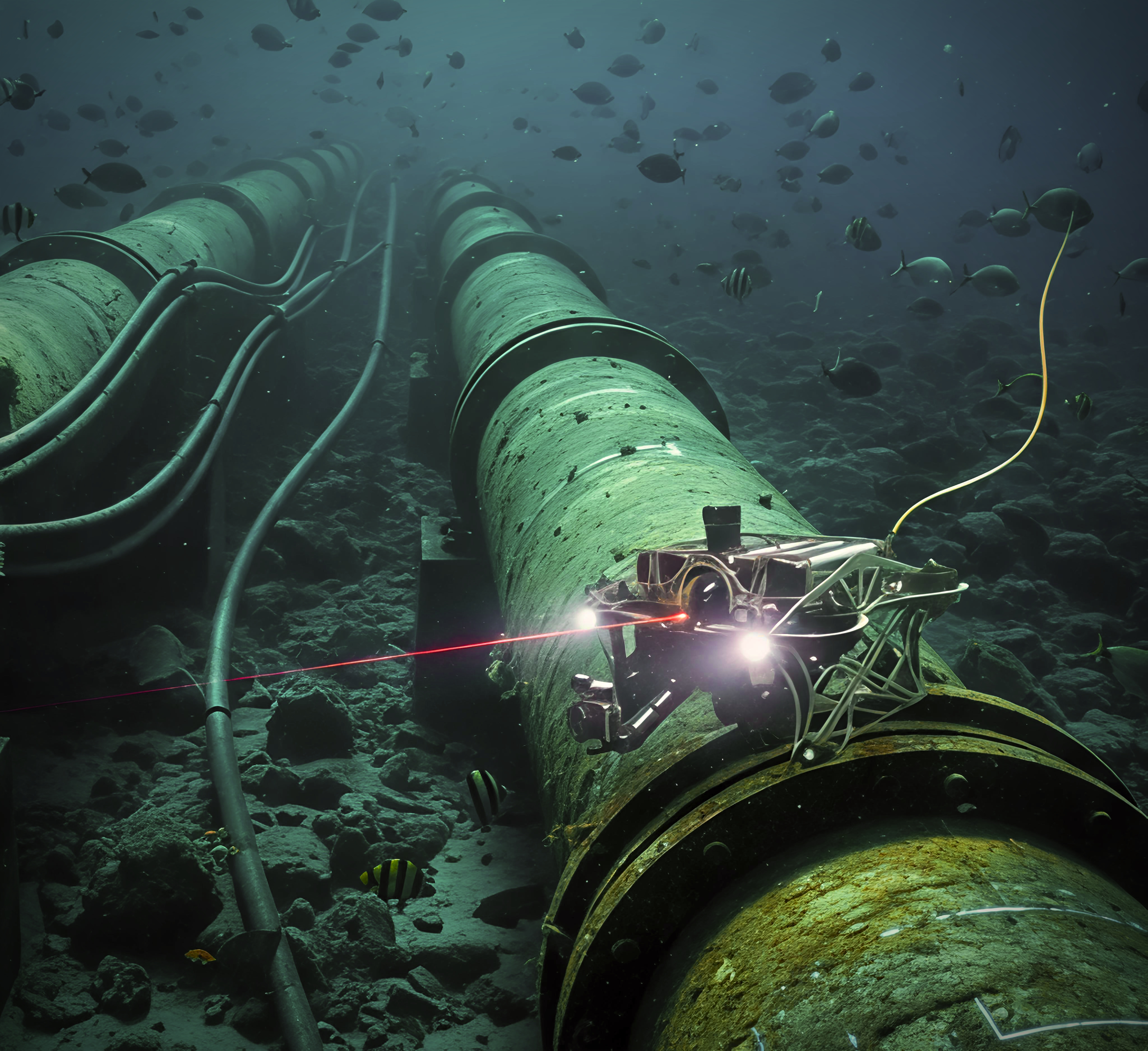
What is underwater pipeline and industrial inspection?
Underwater pipeline and industrial inspection uses ROVs, cameras, sonar, sensors, and specialized measurement equipment to assess submerged pipelines, tanks, supports, cooling-water systems, and other underwater industrial assets.
Can an ROV inspect underwater pipelines and pipeline crossings?
Yes. ROVs can inspect accessible external pipeline surfaces, crossings, supports, joints, and other submerged components. Depending on the mission, inspections can capture visual evidence, identify anomalies, and collect sonar or measurement data.
Can robotic inspection detect corrosion and coating damage?
Yes. ROV-based visual inspection can document visible corrosion, coating deterioration, leakage indicators, debris, and other surface conditions. Where required, specialized measurement or NDT equipment can be incorporated into the inspection configuration.
Can an ROV inspect inside an underwater tank or reservoir?
In some situations, yes. Internal tank or reservoir inspection may be possible when access, dimensions, fluid conditions, visibility, location, cleanliness, and safety controls are suitable for the selected robotic system and inspection approach.
What types of industrial assets can Coratia inspect underwater?
Coratia can support inspection of submerged pipelines, pipeline crossings, supports, joints, industrial tanks, reservoirs, cooling-water systems, channels, and other accessible underwater industrial components. The inspection configuration is selected according to the asset and mission requirements.
What information is required to plan an underwater industrial inspection?
Useful information includes asset drawings or dimensions, inspection location and access details, fluid or water conditions, operating status, hazards, isolation requirements, previous inspection records, target observations, and required deliverables. This information helps determine the appropriate ROV, sensors, payloads, and inspection methodology.