Article
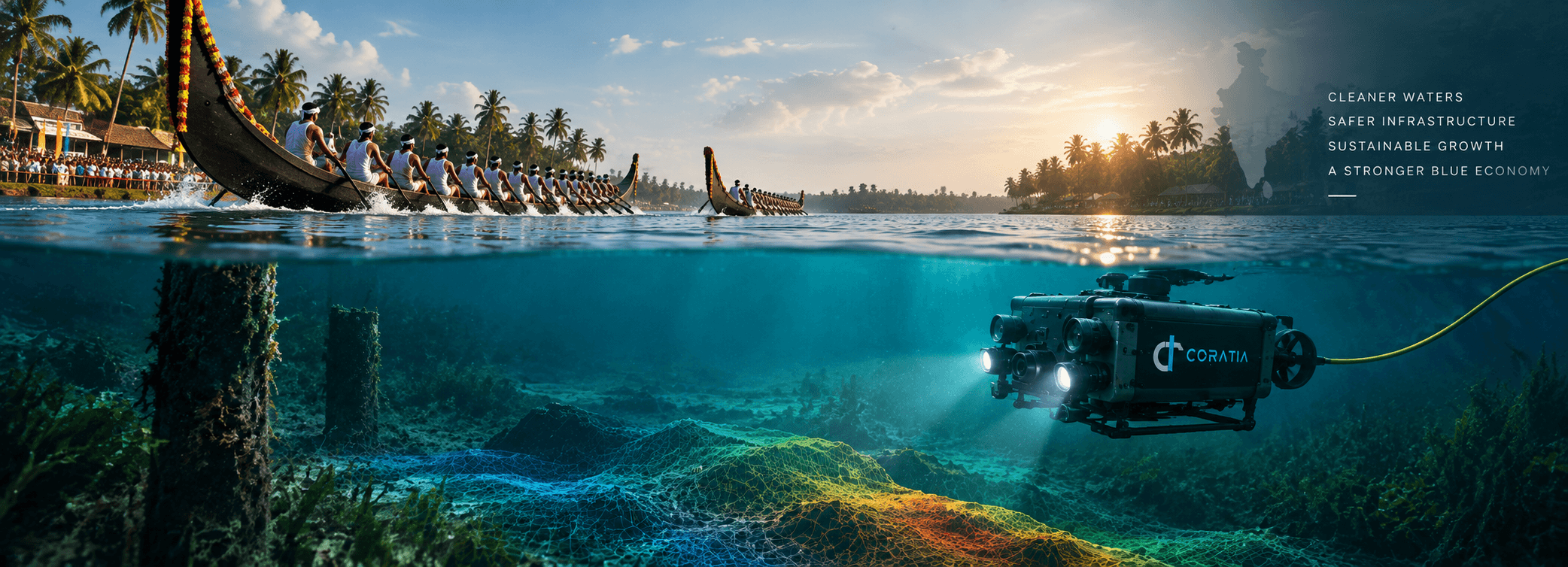
On 22 August, Punnamada Lake in Alappuzha is set to host the Nehru Trophy Boat Race, bringing together Kerala’s famed chundan vallams, generations of craftsmanship and thousands of spectators along the backwaters.
It is a remarkable celebration of people and water.
But beneath those boats lies another world - one that technology is now allowing us to understand with far greater precision.
The Water Beneath the Celebration
Vembanad is Kerala’s largest lake and forms a major part of the Vembanad-Kol Wetland, a Ramsar-designated wetland of international importance since 2002.
These waterways are living systems, like many other waterways in India. Sediment moves. Depths change with seasons. Aquatic habitats evolve. The relationship between water, communities and infrastructure is constantly changing.
Understanding those changes is becoming increasingly important as our ability to observe underwater environments improves.
Traditionally, much of what lies beneath the surface has been understood through periodic surveys, manual measurements and the experience of people who know these waterways intimately.
Today, technology gives us another layer of visibility.
We can examine underwater environments more regularly, precisely and safely.
A New Way of Seeing Water
Satellites help us understand the land. Drones survey landscapes in remarkable detail. Sensors monitor weather, air quality and environmental conditions.
Underwater robotics can extend that visibility beneath the surface.
A remotely operated vehicle equipped with sonar, cameras and specialised sensors can map underwater terrain, inspect submerged infrastructure, assess sediment distribution and document changes over time. The real value lies in the knowledge created through repeated observation.
When an underwater environment can be surveyed consistently, we begin to build a clearer picture of how it changes. That information can support conservation, infrastructure planning, dredging, navigation and scientific research.
From Waterways to a Water Economy
India is increasingly looking at its rivers, inland waterways and coastline as important economic assets.
Cargo movement through inland waterways has grown considerably in recent years, while government initiatives are expanding the role of water-based transport and coastal shipping within India’s logistics network.
At the same time, the blue economy is becoming an increasingly important part of conversations around infrastructure, energy, fisheries, shipping, tourism and sustainable growth.
A waterway is not simply a transport corridor. Its depth, sediment profile, ecology and surrounding infrastructure all matter.
Ports need underwater structures inspected. Bridges require monitoring of submerged foundations. Inland waterways need reliable information about channels and sedimentation. Offshore infrastructure must be inspected throughout its operating life.
The opportunity, therefore, goes beyond underwater inspection. It is about creating an increasingly detailed underwater data layer for India’s water economy.
Underwater robotics can contribute to this by enabling more systematic monitoring while reducing the need for people to enter difficult or hazardous underwater conditions.
Designing for Indian Waters
Underwater robotic systems are now increasingly being designed and developed in India for Indian operating conditions, which wasn’t the case earlier.
Our aquatic environments range from rivers and reservoirs to backwaters, ports and coastal waters. Each presents different challenges in visibility, currents, depth, sediment and accessibility.
Understanding that diversity is essential to developing technologies that are adaptable, precise and relevant to the environments in which they will operate.
A Deeper Relationship With Water
Our relationship with water extends far beyond commerce. Kerala’s boat-racing traditions are one expression of a much larger relationship India has with water. From river festivals and pilgrimages to fishing communities, coastal livelihoods and centuries-old settlements along rivers and backwaters, water has always been deeply connected to our culture, economy and everyday life.
Technology can now add another layer of knowledge to that relationship.
For a country with extensive coastlines, river systems, reservoirs, ports and inland waterways, the ability to see and measure what lies beneath the surface can become increasingly valuable - for safety, conservation, infrastructure and economic activity alike.
It gives us an opportunity to know our waters better, protect them more effectively and build India’s blue economy on a deeper understanding of the environments on which it depends.